

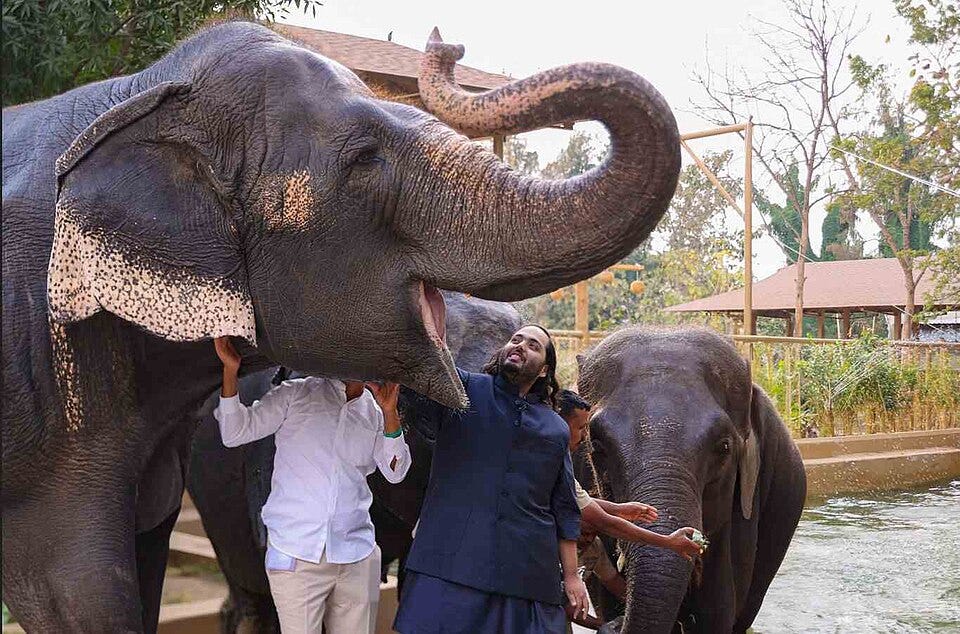
An investigation by the Guardian and Mongabay found that British ministers were advised not to engage formally with the Indian zoo Vantara ahead of a crucial meeting of CITES, which regulates international trade in wild animals.
Vantara, founded and run by Indian billionaire Anant Ambani, says it cares for more than 150,000 animals including hundreds of elephants and other exotic creatures, some of which are endangered. Conservation groups have questioned how the large collection was built. The Indian Supreme Court previously dismissed allegations of wrongdoing, the Guardian reports.
A subsequent CITES fact-finding mission raised concerns over India’s compliance with international regulations on the import of animals. The meeting this week was to assess the country’s continued compliance.
Public records requests by the two outlets revealed Vantara representatives had met with representatives of the UK environment department (Defra). Invitations to visit the zoo were declined. UK officials later seeking advice were then told ministers should not formally engage.
Ambani has maintained that animals have only been brought to Vantara legally and to ensure their welfare.
Ecuador: A group of scientists published an open letter calling on Ecuador to clamp down on the smuggling of marine iguanas from the Galapagos Islands. The letter follows a number of recent instances of foreign nationals caught trying to take specimens out of the country. They include one case in which a Russian woman was found with 32 iguanas at the airport in Quito. Galapagos iguanas were added to CITES appendix one, largely restricting international trade, in 2025.
Thailand: Authorities seized 400 pieces of ivory at a port in Thailand as part of a crackdown on the illegal wildlife trade. The ivory was hidden inside timber shipments arriving from Zambia, intelligence officials said. The pieces are now being analysed in order to assist wider investigations into organised trafficking.
Indonesia: A private company has applied for permission to breed Asian golden cats, a species listed as vulnerable by the IUCN, to sell as pets. The Indonesian firm has made the application to the CITES secretariat and has supported its application with evidence of successful breeding over a decade. Scientists, however, have expressed scepticism that commercial breeding at scale is possible due to the species’ solitary nature. They also warned that pet trading can increase demand for wild animals and feed into poaching.
USA/Vietnam: A couple pleaded guilty to processing $51,000 in payments to enable an individual in Vietnam to illegally move wildlife products to and from the US. The parts included lion teeth, tiger pelts and rhino horn. The pair, a husband and wife from California, met an undercover agent in a car park and accepted $12,000 in cash as a payment for rhino horn. They also gave advice on how to sidestep US banking regulations.
South Africa: The killing of a rhino and calf led to the arrest of two suspects in a private game reserve in Eastern Cape, South Africa. The alleged poachers, foreign nationals in their 30s, were arrested hours after the killing.
Togo: A new study found 82 species of bird for sale at wildlife markets in Togo over a period of two years. The authors highlighted the threat that the trade in exotic animals poses to biodiversity in the country. The species included seven that are threatened or near-threatened, 25 which are CITES-listed, and at least a third are known to have declining populations. The traders in the market had crossed the border from Benin, indicating an element of international trade.
Thank you so much for reading Wild Crime. If you’d like to support Wild Crime, please hit subscribe or share this newsletter with someone who might find it interesting. Every bit of support makes a real difference.