

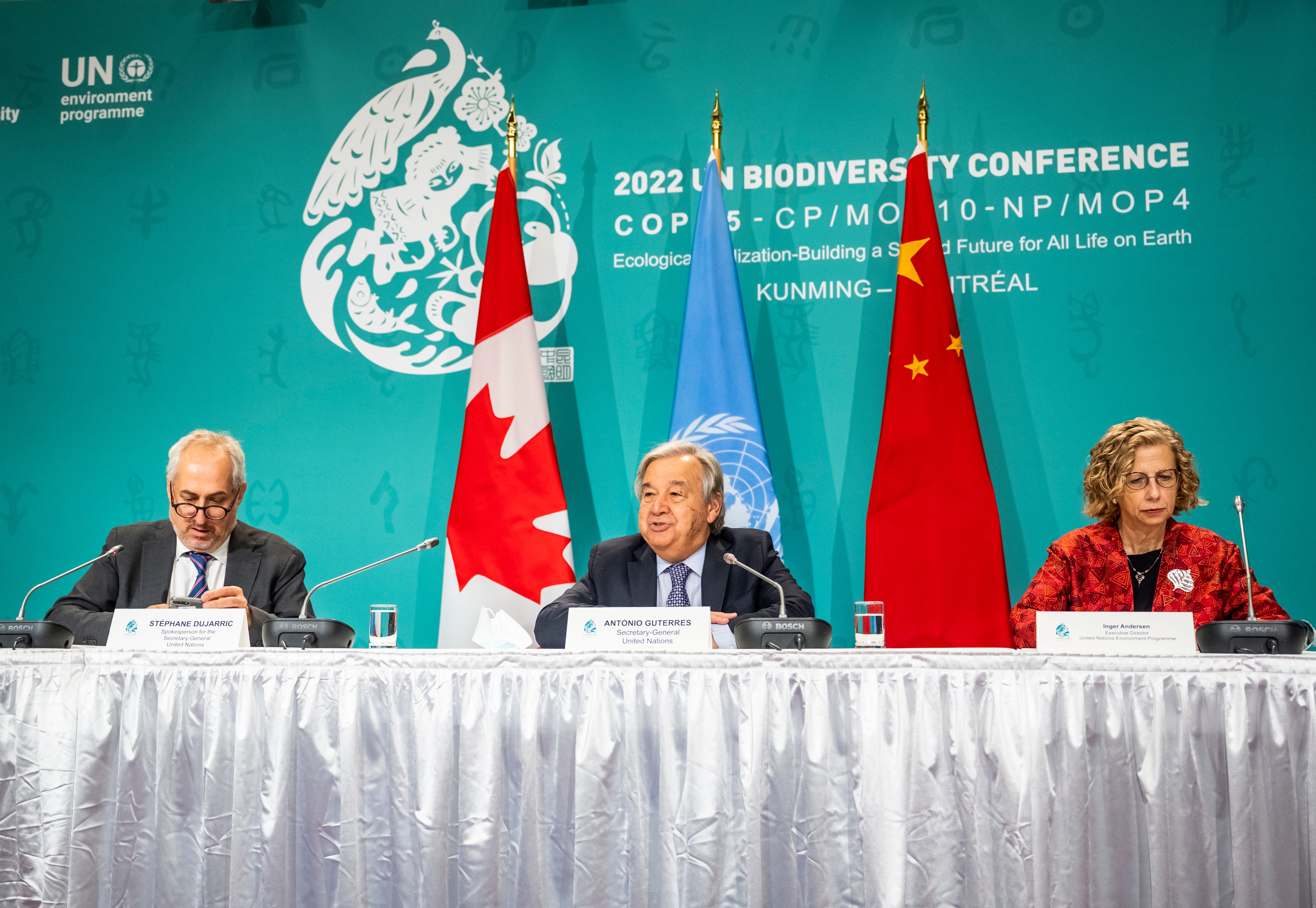
Has the world properly accounted for the biodiversity threat posed by environmental crime? Two international conferences provide a mix of answers to that question.
It has been four years since governments across the world came together to agree on a series of targets aimed at protecting our planet’s biodiversity. Delegates have been in Armenia for the past two weeks at Cop17 to take stock, with negotiations set to conclude over the weekend.
The slogan of the conference is “taking action for nature”, but progress on the set targets has been patchy with nearly all on track to be missed without improvement. While the impact of criminal networks and industries on biodiversity loss is addressed by the framework, there is arguably little in the specifics to help countries curb illegal activity.
Meanwhile, in Vienna at the 13th conference of the UN Convention on Transnational Organised Crime (UNTOC), 83 countries voted to begin negotiations on an international agreement relating to crimes affecting the environment.
Wild Crime is relaunching this week, with a renewed focus and effort on scrutinising how biodiversity politics and discussions are failing to take account of the illegal activities hastening the demise of species and damaging ecosystems.
Now is a perfect moment for our relaunch, with diplomats and governments locked in a room in Yerevan reviewing biodiversity targets and the new commitment at UNTOC.
Criminal activity, from wildlife trafficking to illegal logging or mining, is hastening the demise of species and habitats across the planet. Money is flowing into the pockets of those breaking the law, and efforts to stop them are often far from adequate. Cop17, and international agreements like the Convention on Biological Diversity (CBD), are opportunities to take a stand.
What are the biodiversity targets?
Cop17 is part of the wider UN Biodiversity Conference. This year’s edition marks the first global review of collective progress on the Kunming-Montreal Global Biodiversity Framework which established 23 targets for governments to meet in pursuit of better protection of nature.
The best known of these is probably 30x30, a push to protect 30% of the planet by 2030. Success has been mixed on this, with some regions performing better than others. Latin America, for example, has protected 29% of its landmass and Oceania has protected a creditable 41% of its oceans, according to some estimates. Asia and Europe have not performed so well.
Biodiversity finance has also been pushed with targets of $200bn of global funding a year by 2030. There are also targets on ecosystem restoration, species recovery, invasive species and green spaces in urban areas.
A report published last month by two NGOs, suggested governments are currently falling short. Despite notable progress on the 30x30 goal, only 10% of the planet’s marine areas are currently protected. That is before accounting for the problems of so-called “paper parks” without proper enforcement action.
The annual funding shortfall, the report found, is between $75bn and $150bn. Spending on marine protection is a particular area of concern.
“Progress is being made clearly, but it is uneven, and it is clearly also not at the pace and scale required to achieve the Framework’s 23 targets by 2030,” Astrid Schomaker, executive secretary of the UN Convention on Biological Diversity, said.
Failing to account for crime?
Several of the biodiversity targets are highly relevant to those with an interest in wildlife crime, even if it does not qualify for a dedicated target of its own. The 2022 biodiversity assessment acknowledges that the illegal trade in wildlife has grown to be the third largest class of illegal trade, worth some $199bn a year, although timber and fish account for a large part of that figure.
Target five, which relates to the sustainable use and trade of animals, is most relevant. Target five calls on countries to ensure the “use, harvesting and trade of wild species is sustainable, safe and legal, preventing overexploitation”.
In achieving this goal, countries are advised to take steps to reduce demand for animals, support sustainable wildlife management and create monitoring frameworks for things like wild meat. Illegal hunting, poaching and wildlife trafficking could undermine achieving this goal.
Target four says governments should “ensure urgent management actions to halt human induced extinction of known threatened species”. Wildlife trafficking and hunting are prime examples of how humans can threaten the survival of species.
Target nine aims to ensure that sustainable use of wild species provides social, economic and environmental benefits to local populations. While local populations sometimes partake in illegal activity, usually out of economic need, it can also undermine legitimate and sustainable use of wild species. Illegal logging can destroy habitats used by subsistence hunters, for example.
In all of these targets and the wider framework, there is a recognition of the need for wildlife trade to be legal and sustainable, but there is no dedicated target for tackling environmental crime. This leaves a wider question about whether governments are giving sufficient attention and resources to the enforcement measures needed to turn those commitments into action.
Are we counting the cost of criminal activity?
Overexploitation remains a major threat to many species’ survival. Illegal trade makes it much harder to count the cost of sustainable use as it happens outside the view of authorities. Unsustainable hunting has been identified as a threat to more than 1,000 mammal species alone, according to the IPBES.
Wild species provide an important source of income to hundreds of millions of people worldwide, including a majority of the world’s poor. This means that illegal trade is not only a biodiversity issue, but a vitally important threat to human survival.
The Jane Goodall Institute described the commitment at UNTOC as a “significant breakthrough”. Such a move could complement the Cop17 process, adding another international agreement to make targets and protections more comprehensive. But negotiations are just beginning and a draft is expected to be submitted for consideration in 2028.
Dealing with the problem requires strong regulations which are rigorously enforced by well-funded, well-trained officers and rangers. Governments need to use these opportunities to take the threat seriously.
Thank you so much for reading Wild Crime. If you’d like to support Wild Crime, please hit subscribe or share this newsletter with someone who might find it interesting. Every bit of support makes a real difference.